

Community-led screening for disease in East New Britain, Papua New Guinea
We’re partnering with community researchers to check people for illness in East New Britain, Papua New Guinea.
People who get sick with tuberculosis, diabetes or other diseases don’t always realise it. This means they might not get the medical care they need, and infections continue to spread.
To address this, we’re working with partners in Papua New Guinea to conduct multi-disease screening in East New Britain province.
Multi-disease screening means checking people for:
-
infectious diseases like tuberculosis, HIV and malaria
-
non-communicable diseases like diabetes and hypertension.
Working in communities and local households, we’re taking a holistic approach to multi-disease screening. We aim to:
-
increase early diagnosis of disease
-
help more people get follow-up treatment
-
support local researchers and healthcare workers
-
make the process more inclusive of gender and disability.


Tap an image to expand it in focused view
Partnering with communities
Our screening model is co-designed in partnership with local communities.
We screen in and among the community, and when we find disease, we help people get connected to care.
To support and evaluate the screening model, we’re also training and working with local researchers and health workers.
Inclusive research

President of East New Britain Association of Disabled Persons Ben Theodore is one of our project’s community researchers. As a person with lived experience of disability himself, he gathers disability-inclusive data by asking questions developed by the Washington Group.
It's important that this work is inclusive and fair. To support these aims, our project includes:
-
a community advisory board that guides us
-
a local governance group that oversees our work
-
gender-sensitive outreach and peer engagement
-
community involvement in research by local people, including people with disability.
Timeline
This project is planned to run from July 2025 to June 2029.
Partners
Funding partners
Supported by the Australian Government through the Australian NGO Cooperation Program (ANCP).


Project contact
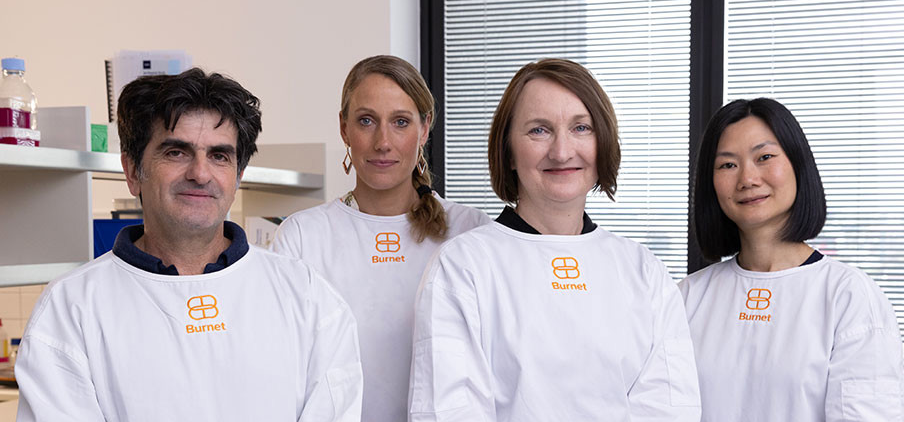
Project team

Dr Dani Lin
Infectious Diseases Specialist

April Holmes
Project Manager

Lyszandra Yomba
ANCP Project Manager; Co-lead, Women's, Children's and Adolescents' Health, Papua New Guinea

Clare Valaki
Project Coordinator
Sakaia Luana
Research Nurse; Qualitative Lead
Kevin Wanowi
Research Radiographer