


The C No More project: Community corrections nurse-led model of care to eliminate hepatitis C
People completing community corrections orders share common risk factors for hepatitis C transmission with people in prison, a group with known high hepatitis C prevalence.
However, they represent a much larger population not currently targeted by hepatitis C treatment programs. This study offers free hepatitis C testing and treatment to people in community corrections and assesses the effectiveness of the model of care.
Objective
We aim to implement and evaluate a nurse and peer partnership-led mobile model of hepatitis C care. The model utilises point-of-care testing and rapid DAA treatment initiation for people with criminal legal system involvement at selected sites in Victoria.
Timeline
2023–2026.
Approach
A mobile, medically equipped van staffed by a hepatitis specialist nurse and peer support worker parks adjacent to metropolitan community corrections facilities. The service offers hepatitis C testing for individuals attending these sites. Participants are tested for current hepatitis C infection using point-of-care fingerstick testing, which returns a result in around 60 minutes.
All participants with current hepatitis C infection are offered a clinical assessment and DAA therapy in line with current Australian guidelines.
Hepatitis C information and education are initiated with anyone having contact with the clinic team. This includes harm reduction strategies where appropriate.
Phase 2 (May 2025 to April 2026) offers vaccinations and introduces screening for sexually transmitted infections.

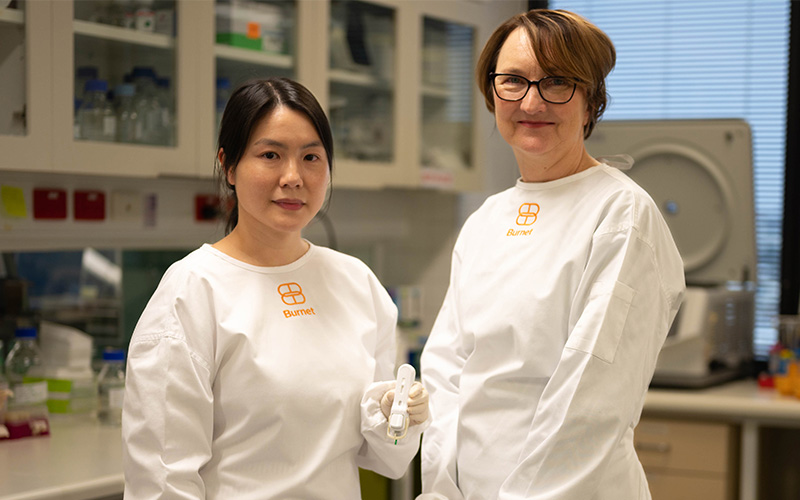
Finger prick testing takes only an hour.
Community impact
We're using a mixed-methods design to assess the service. This includes qualitative, sociodemographic, clinical and operational data to evaluate the acceptability, feasibility, effectiveness and cost-effectiveness of the mobile model of care.
Our study:
Student opportunities
Understanding hepatitis C treatment complexity through lived experience
This project will support the development of a hepatitis C treatment complexity tool by exploring the lived experiences of people receiving care through the C No More program.
You'll conduct semi-structured interviews with approximately 10 participants representing a range of treatment experiences and support needs. Interviews will explore barriers and facilitators to treatment engagement, support requirements and perceptions of factors contributing to treatment complexity.
You'll also analyse data using thematic analysis to assess the face validity of the preliminary tool and identify factors not captured in quantitative analyses. The findings will ensure the tool reflects lived experience and informs tailored models of hepatitis C care.
Open to
- Masters
- Masters by research
Vacancies
2
Supervisors
Contact
Featured publications
"Quick, simple, and friendly": Understanding the acceptability and accessibility of a nurse and peer-led, mobile model of hepatitis C care adjacent to community corrections in Australia
International Journal of Drug Policy
S. Griffin et al
People in community corrections are a population with unmet need for viral hepatitis care
EClinicalMedicine
Rebecca Winter et al
Partners
Funding partners
- Gilead Sciences, Investigator Initiated
- St Vincent’s Hospital Inclusive Health Award
- Victorian Department of Health
- National Health and Medical Research Council Synergy Grant (#2027497)
Collaborators
- St Vincent’s Hospital Melbourne
- Harm Reduction Victoria
- National Point of Care Testing Program (The Kirby Institute)
Project contacts
Project team

Professor Margaret Hellard AM
Adjunct Professor, Monash University, DEPM.

Professor Mark A Stoové
Head of Public Health

Dr Rebecca Winter
Deputy Head, Justice Health

Professor Alexander Thompson
Investigator/Clinical Supervisor
St Vincent’s Hospital, Melbourne
Associate Professor Jacinta Holmes
Investigator/Clinical Supervisor
St Vincent’s Hospital, Melbourne

Samara Griffin
PhD student/Research Assistant
Sione Crawford
Investigator
Harm Reduction Victoria
Jane Dicka
Investigator/Peer Mentor
Harm Reduction Victoria
Dr Tim Papaluca
Investigator
St Vincent’s Hospital, Melbourne
