


Published 14 October 2026
First Nations women to lead new research into safety in justice settings
People

Media enquiries

A new Burnet Institute-led research project will work with First Nations women with disability and experience of the justice system to better understand restrictive practices and co-design safer, culturally grounded alternatives.
The project, From Restriction to Relational Safety: Understanding and Transforming Pathways Affecting First Nations Women Living with Disability in Justice (R2RS), will focus on the experiences of First Nations women in Victoria who have experienced prison, parole or community supervision.
Restrictive practices can include isolation, close monitoring, restrictions on movement, behavioural controls and physical restraint. Yet there is limited research examining how these practices are experienced by First Nations women with disability, why they occur, and their impacts on health, safety and social and emotional wellbeing.
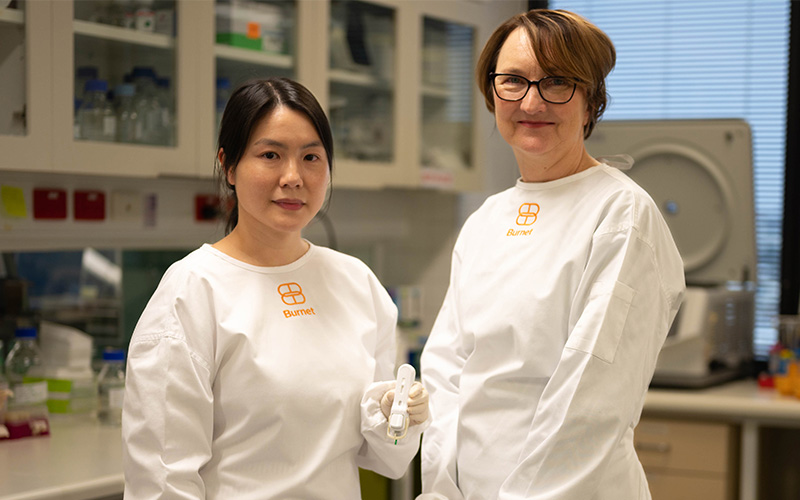
Led by Professor Kelly Menzel, Director of Burnet Institute’s Aboriginal and Torres Strait Islander Initiative, the research will bring together expertise in First Nations research, disability, justice, health and lived experience.
Kelly said the project was designed to move beyond documenting problems to identifying practical ways systems could respond differently.
“First Nations women with disability and experience of the justice system hold critical knowledge about where systems are working, where they are failing and what safety and dignity should actually look like,” she said.
“This research is about listening to that knowledge and working alongside women to develop practical alternatives that are culturally safe, disability-informed and grounded in their experiences.
The project will include individual yarns and yarning circles with First Nations women with self-identified disability who have experienced prison, parole or community supervision.
The research will include women with a range of experiences of disability, including physical, cognitive, intellectual and psychosocial disability, acquired brain injury, neurodivergence, chronic illness and chronic pain.
A key focus will be understanding practices that may not currently be visible in formal reporting.
The project will examine where systems fail to recognise disability, respond appropriately or uphold cultural safety, and identify opportunities to intervene before restrictive practices occur. Findings will be translated into a practical framework, policy recommendations and resources for governments, justice services and community organisations.
Kelly said developing the solutions alongside women was critical to ensuring the research could lead to meaningful change.
“We don’t want lived experience brought in at the end to validate a solution that has already been designed,” she said.
“Women will help determine what the research focuses on, make sense of what we learn and shape the alternatives we put forward.
“That gives us a much stronger foundation for changes that are useful, accountable and grounded in community priorities.”
Burnet will undertake the project in partnership with The Torch, a First Peoples-led organisation working with people impacted by the criminal legal system through culture, art and healing, and Flat Out, which provides advocacy and support for women, trans and gender-diverse people who have been criminalised. Both organisations will have ongoing roles in engagement, governance and translating the findings into practice.
The project also reflects broader work underway at Burnet to strengthen First Nations leadership, governance and accountability across research, partnerships and organisational practice.
“For us, this is also about how research is done, ensuring First Nations people have genuine leadership, authority and ownership throughout the process, rather than being brought in after decisions have already been made,” Kelly said.
The project is funded by the National Disability Research Partnership (NDRP) through its 2026 research funding round, which supports priorities under Australia’s Disability Strategy 2021–2031