


No one left behind: Why the HIV response still matters
In the fight against HIV, your support matters more than ever.
When HIV emerged, tools were scarce and answers fewer. Today, hard-won progress faces new challenges – and your support matters more than ever.
When Professor Gilda Tachedjian joined Burnet as a young research assistant in the late 1980s, the AIDS pandemic was just beginning to unfold. Working at Fairfield Hospital, she saw the virus’s impact up close at a time when there were no effective treatments and little understanding of the virus.
“We saw people ravaged by the virus, but we couldn’t help them,” she recalls.
In the lab, Gilda and her colleagues pursued answers, transforming knowledge into drugs, diagnostics and prevention tools.
“That motivation is the Burnet ethos – and it stays with me to this day,” she says.
In the years since, that determination has driven extraordinary progress. With your support, Burnet researchers have helped steer advances in HIV testing and treatment, contributed to prevention breakthroughs and strengthened the evidence base that has shaped policy and practice in Australia and beyond.
Together, these advances have transformed what HIV means for millions of people – yet reductions in international HIV funding now threaten those hard-won gains, particularly in communities where access to care remains uneven. The theme of last year’s World AIDS Day, No-one left behind, speaks directly to this moment.
Professor Mark Stoové, Burnet’s Head of Public Health, witnessed the impact of the funding cuts during recent visits to Tanzania, Botswana, Zimbabwe and South Africa.
“It’s devastating,” he says. “People are not getting access to drugs, education and prevention services.”
Burnet modelling, published in The Lancet, suggests that funding cuts could result in up to 10 million additional cases of HIV globally by 2030. In December, Burnet’s Director and CEO, Professor Brendan Crabb AC, shared that sobering assessment with leaders at the World AIDS Day Parliamentary Breakfast – adding that the moment calls for resolve, not retreat. Achieving the elimination of HIV transmission in Australia and across our region will require continued investment, he said, particularly in the Pacific where sustained, community-led action remains essential.
In Fiji, for example, HIV cases have more than tripled in just 12 months. With donor backing, Burnet is working alongside local partners to establish Fiji’s first peer-led HIV counselling network, led by people with lived experience, grounded in empathy and trust.
As Burnet marks its 40th anniversary in 2026, we recognise four decades of commitment to tackling HIV. This kind of progress doesn’t happen by chance. It happens because people like you choose to stand alongside communities when it matters most. With your partnership, Burnet will continue to respond where the need is greatest, and work towards a future where truly no one is left behind.
Professor Gilda Tachedjian on the early days of HIV
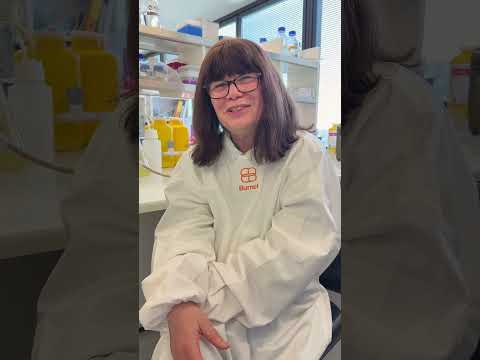
Professor Mark A Stoové on the impact of global funding cuts

More from the Autumn 2026 newsletter
View 9 more
23 Sep 2026
Message from the CEO: Your commitment, in action
From Burnet Director and CEO Professor Brendan Crabb AC.

23 Sep 2026
Honouring our former Chair and welcoming new leadership at Burnet
Burnet honours an extraordinary legacy and welcomes new leadership.

23 Sep 2026
Thanks to you, young people in Myanmar have somewhere to turn
Your generous support helps create safe community spaces for young people.