

Understanding people-centred care for universal health coverage in Papua New Guinea
As the world works toward Universal Health Coverage, many communities face barriers to getting the healthcare they need. This includes communities in Papua New Guinea. Our project asks: what does it actually mean for healthcare to put people first? By listening to the experiences of people seeking and providing care, we're building evidence to help transform health systems from the ground up.
Universal health coverage explained
Universal Health Coverage (UHC) means everyone has access to the health services they need, without being pushed into poverty to pay for it. It is a core target of the United Nations Sustainable Development Goals, and a fundamental human right.
Around 4.6 billion people did not have full access to healthcare in 2023. More than 2 billion faced financial hardship because of health costs.
Why people-centred care matters
Across the world, health systems have committed to the idea of 'people-centred care'. People-centred care is an approach that puts patients, families and communities at the heart of how healthcare is designed and delivered. This goes beyond traditional ideas of patient care to include the full range of people and relationships that shape health experiences. That includes cultural norms and communities, and the emotional and social dimensions of seeking help.
People-centred care features prominently in international health declarations, but we still have a limited understanding of what it looks like in practice. This is especially true in places like Papua New Guinea, where people face complex health challenges and unequal access to care.
With the 2030 deadline for the Sustainable Development Goals approaching, health inequities continue to widen between and within countries. Universal Health Coverage remains out of reach for many, and people-centred care is increasingly seen as part of the solution.
What we're doing
In Papua New Guinea, we're working with:
-
young people seeking sexual and reproductive healthcare in Eastern Highlands Province
-
adults seeking tuberculosis care in Western Province.
Our research explores how people's experiences of care reflect or fall short of people-centred principles.
We're conducting in-depth interviews with community members and health service providers. We want to understand:
-
how people's lived experiences of seeking, receiving and delivering healthcare reflect people-centred care
-
what conditions and contexts make people-centred care possible
-
what the qualities and outcomes of people-centred care look like in practice.
This research is part of a much larger international effort. We're leading the analysis of data collected from 7 exploratory studies across 6 continents, bringing together evidence from diverse settings to shape global understanding.
Our approach
Led by Professor Steve Bell, this project is part of the Lancet Global Health Commission on People-Centred Care for Universal Health Coverage. The Commission is an international collaboration working toward a comprehensive, evidence-based understanding of what people-centred care means and how to achieve it.
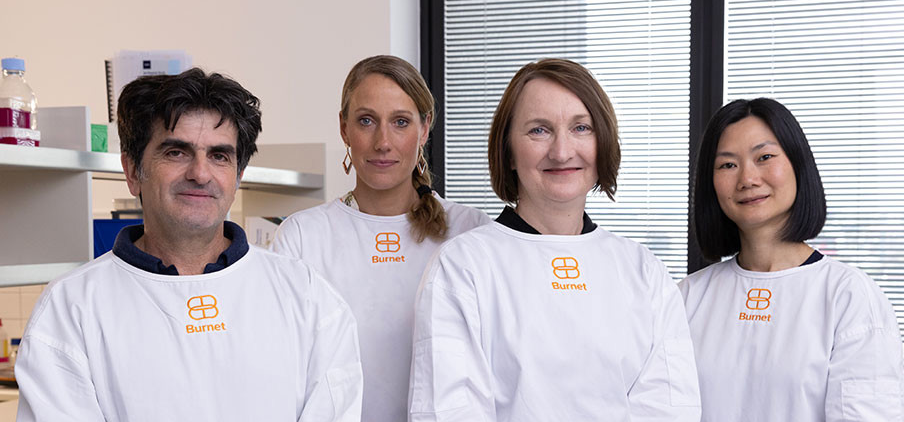
Our work in Papua New Guinea is co-led with researchers from Burnet Institute, the Papua New Guinea Institute of Medical Research, James Cook University and Harvard University. The work complements similar work we're co-leading in:
-
Nepal
-
Lao
-
the United States
-
Canada
-
Malawi.
By centring the voices and experiences of community members, we aim to ground the Commission's findings in lived realities.
Our Papua New Guinea findings and international dataset will feed directly into the Lancet Commission report, due to be published in 2027.
Partners
Collaborators
- Papua New Guinea Institute of Medical Research
- James Cook University
- Harvard University
Project contacts

Professor Stephen Bell
Co-Head Global Adolescent Health; Senior Principal Research Fellow; Theme Lead, Social Science and Global Health
Project team
Professor Stephen Bell
Co-Head Global Adolescent Health; Senior Principal Research Fellow; Theme Lead, Social Science and Global Health

Dr Nalisa Neuendorf
Honorary Senior Fellow
