
When women are missing from health research, outcomes suffer, for everyone
To mark International Women's Day, Professor Caroline Homer writes about the consequences of excluding women from health research, and what needs to be done to improve health outcomes.
International Women’s Day often focuses on representation and equality.
In medical, public health and international development research, however, the issue is more fundamental. Who is included in the evidence base determines how well health systems work, and for too long, women have been missing from that picture.
This problem is not confined to health. A growing body of analysis shows that gender data gaps persist across policy domains because many data systems were never designed to capture women’s lives. A recent global assessment found that more than three‐quarters of gender‐related data is over a decade old, limiting the ability of governments and institutions to design effective interventions. In health, the consequences of missing or outdated data are particularly acute.
“...more than three‐quarters of gender‐related data is over a decade old, limiting the ability of governments and institutions to design effective interventions.”
Women have been under-represented in clinical trials and health datasets, across decades of medical research. While policies have improved, the legacy of exclusion continues to shape how diseases are understood, diagnosed and prevented or treated today. Much of the evidence that underpins modern health care, from diagnostics to treatment, has been derived predominantly from male participants.
One of the clearest examples of this exclusion is pregnancy. Pregnant women and gender diverse pregnant people have been systematically under-represented in biomedical research, often on the basis that pregnancy is a “vulnerable” state. In practice, this has meant that critical evidence about the safety and effectiveness of medicines is missing precisely when it is most needed. As a result, clinicians and patients are forced to make high-stakes decisions in the absence of data, rather than being guided by it.
The impact is measurable. Women are more likely to experience adverse drug reactions. They are more likely to be misdiagnosed or diagnosed later. Conditions such as cardiovascular disease, autoimmune disorders and chronic pain often present differently in women, yet those differences have not been consistently reflected in clinical guidance or care pathways.
“Conditions such as cardiovascular disease, autoimmune disorders and chronic pain often present differently in women, yet those differences have not been consistently reflected in clinical guidance or care pathways.”
The consequences of this gap became highly visible during the COVID-19 pandemic. Because pregnant women and gender diverse pregnant people were largely excluded from early vaccine trials, initial guidance was shaped by uncertainty rather than evidence. This was not a failure of science, but of research design. When entire populations are routinely excluded from studies, uncertainty is built into the system from the start.
These challenges are not because women’s health issues are rare or poorly understood. They exist because data has not been systematically collected, analysed or applied with women in mind.
Australia is not immune to these challenges. Women are the primary users of healthcare services and make up a significant proportion of the health and care workforce. Yet the data informing clinical decision-making and policy settings have not always kept pace with this reality.
Balancing the scales in health research means ensuring that the evidence guiding care reflects the lives it is meant to serve. When women are missing from data, health systems are built on partial knowledge. When women are fully represented, they are better able to make informed decisions about their health, participate fully in society and shape their own lives with confidence that care is based on evidence that applies to them.
“When women are fully represented, they are better able to make informed decisions about their health, participate fully in society and shape their own lives with confidence that care is based on evidence that applies to them.”
From a public health perspective, this represents a system failure rather than an individual one. When health research does not reflect real populations, outcomes suffer. Delayed diagnoses, ineffective treatments and higher rates of complications place avoidable pressure on health systems already operating at capacity. The economic costs, through lost productivity, increased healthcare utilisation and preventable treatments or hospitalisations, are substantial.
At a policy level, the implications are equally significant. Health programs and funding decisions rely on robust evidence. When sex-disaggregated data is missing, or under-analysed, interventions risk being blunt, inefficient or poorly targeted. In some cases, they fail altogether.
This is particularly evident in global health settings, where resources are limited and programs must be precise to succeed. Burnet Institute’s work across infectious disease, vaccines, women’s and children’s health, and health equity consistently shows that interventions are strongest when they are grounded in evidence that reflects lived realities, including the different risks, exposures and outcomes experienced by women and girls.
Eliminating gender bias in health research requires structural change. Research systems must move beyond default exclusion and instead design studies that responsibly include pregnant women and gender diverse people from the outset. Ethical frameworks should support inclusion, not use perceived risk as a reason to avoid it. Sex-disaggregated data must be standard practice, embedded into study design, funding requirements and reporting processes.
“Sex-disaggregated data must be standard practice, embedded into study design, funding requirements and reporting processes.”
This also requires practical reform. Researchers, ethics committees and funders must actively justify exclusion rather than assume it. Pregnant women and gender diverse people should be considered eligible for research participation unless there is a clear scientific or safety reason not to include them. Transparency in reporting who is included, and who is not, must become standard practice. Without this accountability, exclusion continues by default.
It is encouraging that Australia’s National Health and Medical Research Council has released guidance aimed at improving the inclusion of sex, gender, variations of sex characteristics and sexual orientation in health and medical research. Embedding this guidance into practice will strengthen both equity and health outcomes.
Crucially, women’s health must be recognised as foundational to population health, economic participation and community wellbeing, not siloed as a niche concern. When women receive effective, evidence-based care, benefits extend across families, workplaces and communities.
Burnet Institute’s role, like that of all research institutions, is to generate evidence that improves lives. But evidence only delivers impact when it is representative, rigorous and applied. Ensuring women are fully reflected in health and medical research strengthens the entire system, improving accuracy, effectiveness and outcomes for everyone and that is why Burnet Institute was the first Australian MRI to formally commit to equity and inclusion in all our research.
“Ensuring women are fully reflected in health and medical research strengthens the entire system, improving accuracy, effectiveness and outcomes for everyone.”
On International Women’s Day, if we are serious about balancing the scales, progress will not be measured by statements or symbolism. It will be measured by whether the evidence we rely on truly reflects the people our health systems are designed to serve.
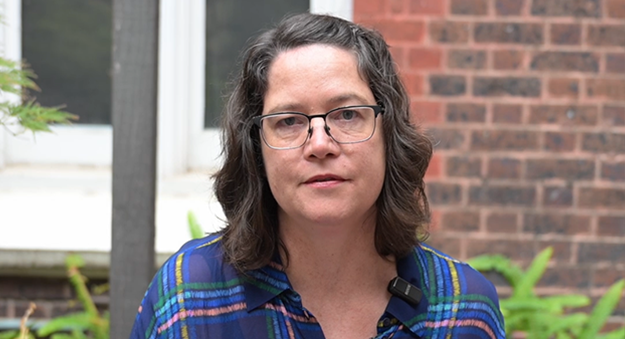
Professor Caroline Homer is Deputy Director of Gender Equity, Diversity and Inclusion at Burnet Institute and serves as the Chair of the National Health and Medical Research Council.
