Clean indoor air a critical blind spot in public health
Burnet Institute has called for stronger government leadership on indoor air quality, giving evidence to the New South Wales Legislative Council’s Inquiry into Clean Indoor Air.
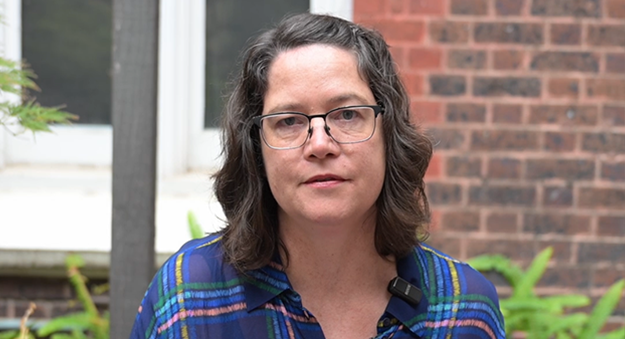
Appearing before the Committee, Burnet Chief Health Officer Associate Professor Suman Majumdar and Christabelle Adjoyan, Project Director of Burnet’s Pathway to Clean Indoor Air initiative, outlined the health, productivity and equity consequences of poor indoor air – and why action cannot wait.
While Australia has made major advances in making water safe to drink and food safe to eat, indoor air has lagged behind.
“Australians spend 90 per cent of our lives indoors,” Associate Professor Majumdar said.
“Every person breathes approximately 11,000 litres of air each day, most of it inside schools, workplaces, healthcare settings, public buildings and homes.”
Yet indoor air remains largely unregulated and inconsistently monitored.
Burnet’s evidence highlighted the role of indoor air in spreading airborne infections such as COVID-19, influenza, measles and Respiratory Syncytial Virus (RSV). It also contributes to longer-term health harms through exposure to fine particulate matter (PM2.5), volatile organic compounds, mould and allergens.
These exposures are linked to asthma, heart and lung disease, impaired cognitive function and reduced learning and workplace performance – with real economic costs through lost school and work days and increased healthcare expenditure.
Hospitals, residential care, schools and workplaces were identified as priority settings, particularly as climate-driven bushfire smoke events increase risks in ageing buildings not designed for current health and climate pressures.
Burnet’s submission outlines seven recommendations across three broad themes:
Clear government leadership
-
Establish a Ministerial Advisory Council on indoor air quality.
-
Develop a NSW Indoor Air Quality Strategy.
Practical improvements
-
Routine CO₂ monitoring in high-occupancy public buildings.
-
Health-based ventilation and air-cleaning guidance.
-
Targeted retrofits for existing public buildings.
Evidence to scale what works
-
Dedicated indoor air quality research and innovation funding.
-
Advocacy for national, health-based indoor air quality standards.
“There is already enough evidence to act. The question is not whether clean indoor air works, it clearly does. The challenge is scaling it up,” Associate Professor Majumdar said.
View our submission:
https://www.parliament.nsw.gov.au/lcdocs/submissions/94328/0046%20Burnet%20Institute.pdf
Find out more about the Pathway to Clean Indoor Air project:
https://www.burnet.edu.au/our-work/health-themes/tuberculosis-covid-19-and-other-airborne-pathogens/clean-indoor-air
Associate Professor Suman Majumdar
Chief Health Officer, COVID-19 and Health Emergencies; Deputy Program Director (Health Security and Pandemic Preparedness; Know-C19); Principal Research Fellow
View profile