

Burnet project expands access to multiple-disease screening in PNG
Tuberculosis (TB) remains one of the top infectious diseases in Papua New Guinea (PNG), but new solutions are reshaping how the country responds.
The introduction of portable X-rays and AI tools to detect TB is not only improving diagnosis but also uncovering health issues that might otherwise go unnoticed.
The Burnet Increasing Access to Multiple-disease Screening project, in partnership with the East New Britain Provincial Health Authority, was designed to combine screening for TB with associated major risk factors such as diabetes, hypertension and malnutrition.
Burnet radiographer Kevin Wanowi said this process integrated and improved patient care, while still ensuring an early TB diagnosis.
“This is one of the areas where we were focusing our efforts on.
“We also help referring people to begin treatment for other diseases and any general medical conditions that we came across.”
Kevin demonstrates a mobile X-ray screening set-up
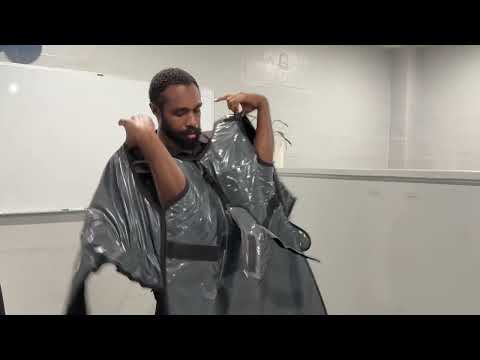
Kevin: We are screening workplaces and communities and helping out with the health facilities, doing screenings for TB especially and then together with blood pressure and diabetes, hypertension and diabetes.
We realised that part of the household, the ones that were working and kids that were in school missed out big time on the screening.
We tried to reach the ones at work and the ones in school.
So this is the X-ray I use. This is the X-ray detector, it's a digital radiography unit. They are all connected to the console computer here.
This is the software that runs everything. Then patient ID, sex, patient name, and age then I choose X-ray examination - chest.
After choosing the examination, then it's going to link it up with the detector. So I come here to set the exposure. Then I have this lab gown I use. The lab gown is to protect myself as soon as I'm ready, I put the client standing here for chest X-ray as soon as I expose, because they are connected to the WiFi, as soon as I expose, it sends the image down here. From here, I do post processing. I edit, rotate and label the X-rays.
After labelling the X-ray, I want to edit this one. So from here, I send it to...
So this is an AI software that we are using. From here, I'll just show you how fast the image goes over. Yep, that's how fast it's going to go. It's processing. And what does it tell you? So the AI, AI reads it according to the scores, the TB score.
So it picks up any abnormalities in the X-rays and then it gives scores to the panel. It counts how many abnormalities anything in the chest that can be...
That's abnormal and then it gives a score from 0 to 0.00 to 0.99. Anything above 0.5, it becomes a TB-presumptive.
Interviewer: And what do you tell the patient then, what's the information?
Kevin: So once we are presumptive TB, we collect the sputum, we take it to the lab, we test it, and if it comes out positive, then we contact them, and then we initiate treatment.
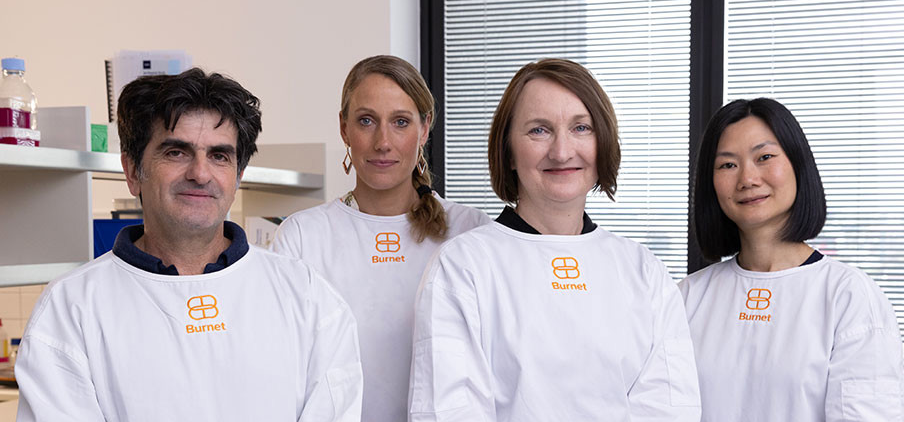
Alongside a small yet mighty team of four, Mr Wanowi brings a portable X-ray machine to communities and workplaces, making it easier to reach more people efficiently.
Over the past year, the project screened nine communities and 28 workplaces — reaching more than 1,340 people.
As a result, more than 30 individuals have begun treatment for TB and other diagnosed conditions.
The project's success offers a promising model for integrated care and disease prevention across PNG.
“It’s nice to know Burnet is part of the solution,” said Gina Vidamo, general manager of a local business with hundreds of employees who were screened.
She explained that the process was valuable not only for reducing sickness but for ultimately helping stop the spread of TB.
“It was interesting to see the results and discover that some people had high sugar levels — something we didn’t realise at the start,” she said
“We love to celebrate life at work, and we’re always having cakes and cookies. Maybe now we’ll celebrate in a different way, focusing more on movement and exercise.”